Project ChildSafe’s Countdown to 2026


As we approach the New Year, we’re taking a moment to reflect on the milestones that made 2025 a defining year for Project ChildSafe. Each achievement marks tremendous progress in our mission to promote firearm safety and responsible gun ownership across diverse communities.

Counting down to 2026, here’s a recap of this year’s highlights:

Ten Thousand Votes for Secure Storage

Former NFL player Clay Matthews scored big for secure storage with this year’s Colt Safety Impact Award. Thanks to his initial donation of $5,000 and 10,000 votes from supporters like you, we raised $15,000 to provide free firearm safety kits to communities across America. We’re grateful to Clay for bringing his commitment to defense off the football field and into protecting what matters most.


Nine Team Members Making It Happen

At Project ChildSafe, we usually stay behind the scenes so safety can take the spotlight—but today, we’re pulling back the curtain. In 2025, we welcomed two new teammates and said goodbye to another. So, it’s time to take a moment to thank everyone who made this year possible. To Justin, Taly, Katie, Kathya, Kellen, Laura, Lucy, Dan, and Bill: the impact you’ve made drives us forward every day.


Eight (x2) New Blog Posts

In 2025, Project ChildSafe shared 16 blog posts from partners across the industry. Whether featuring an expert in mental health or an Olympian in shooting sports, these blogs sparked conversation on social media and amplified key initiatives like National Shooting Sports Month, Gun Storage Check Week, Suicide Prevention, Hunt S.A.F.E., and Women’s History Month.


Seven Days, Seven Influencers

To expand our Gun Storage Check Week® (GSCW) campaign, we brought you 7 days and 7 influencers. This first-of-its-kind activation reached more than 1.3 million people, accumulated nearly 90,000 video views, and resulted in more than 59 hours of educational content watched. Thank you to the influencers who helped spread the word about secure firearm storage this year. Because of your efforts, our messaging brought new audiences like women, families, and underrepresented populations into a community of safe and responsible gun ownership.


Six Industry Partnerships

We are grateful to firearm industry partners like Gun Freedom Radio, Ironworker Magazine, Whitney Strong, and 4-H Shooting Sports, who have made space for secure storage resources on their websites, in their media, and across their platforms. To stay connected with our Louisville focus community, our partners at Whitney Strong have shared Project ChildSafe PSAs across Kentucky. Additionally, the Gun Freedom Radio Podcast has kept us in the conversation nationwide with an episode featuring our very own Bill Romanelli.

Five New Spanish Resources

Este año, la seguridad fue nuestra máxima prioridad. That’s why we created five new Spanish-language resources- including our popular Peer-to-Peer Guide for Suicide Prevention. Connecting communities and empowering conversations about firearm safety is at the heart of what we do; we’re proud to have shared that with muchas personas nuevas this year.

Four Seasonal Campaigns

We brought back four fan-favorite seasonal campaigns this year: Friends & Family, Gun Storage Check Week®, Hunt S.A.F.E. with Kristy Titus, and Suicide Prevention Month — and every single one broke records. Thanks to your support, we reached more gun owners than ever before. Every time you read, share, and engage, you help spread life-saving resources and reminders to store firearms securely. Together, we’re making safety a habit.


Three Gun Shows

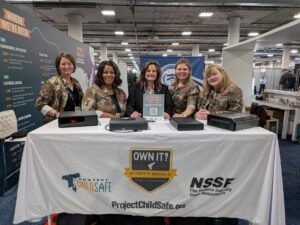
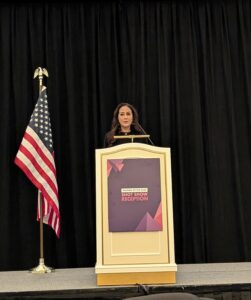
Wherever firearms are sold, safety resources should be close at hand. That’s why we launched a new presence at gun shows, distributing hundreds of safety materials at shows in Florida, California, and Connecticut this year. Along the way, we connected with more than 900 gun owners, local law enforcement, and firearm trainers—partners who are now using these materials in classes to keep the message of responsible ownership moving forward.

Two Localized Digital Initiatives

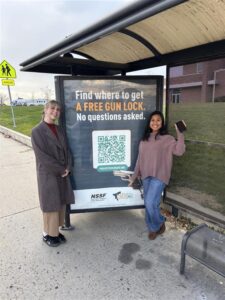
Recognizing the importance of reaching a diverse audience of gun owners, Project ChildSafe launched localized digital initiatives in two communities: Jackson, Mississippi and Miami, Florida. Here are some highlights:

Miami, FL: Safety knows no language barrier, so we launched a Spanish-language campaign in Miami during Suicide Prevention Month. Our vital “time and distance” message reached nearly 30% of Miami’s population, connecting with 137,500 Spanish-speaking parents and adults.

Jackson, MS: As glovebox break-ins are on the rise, we focused on secure storage in vehicles during the summer months. Our campaign reached 85% of African American and Latino communities, nearly 23% of the city’s population, delivering practical tips to keep firearms safe from theft and out of the wrong hands.

One Focus Community Launch

Just last month, Project ChildSafe took a major leap by establishing a focus community in Salt Lake, Utah. This initiative brought together 14 local stakeholders, six law enforcement departments, and 11 lock distribution sites. The launch united one of our largest coalitions ever, amplified by media coverage from every major local affiliate—including Fox, ABC, NBC, CBS, and Telemundo.


Here’s to an Even Safer 2026!

Each of these accomplishments demonstrates our commitment to fostering safe, responsible firearm ownership nationwide. As we approach the New Year, we look forward to building on this momentum—working with our partners, stakeholders, and communities to make 2026 even safer for everyone. Happy New Year from Project ChildSafe!

Firearms and Suicide Prevention: Everybody Has a Role.

By Jared Porter
American Foundation for Suicide Prevention

As an avid hunter and shooter, firearms are a part of my life. I have guns in my home, and many of my friends and family do, too. Some of my most meaningful memories have been made while hunting deer and waterfowl with people I care about. But as a hunter and shooter, there is nothing more important to me than the safety of my loved ones. With this lifestyle comes a responsibility that I don’t take lightly: secure storage of my firearms and ammunition.

Most firearm deaths in the United States are suicides. As a firearm owner, and as someone who has faced my own mental health struggles, this truth hits close to home. In my own moments of distress, I’ve been lucky to have access to lifesaving resources like the 988 Suicide & Crisis Lifeline. But for firearm owners specifically, there is an important action to take even before you or someone you know experiences a moment of crisis: putting timing and distance between people and firearms. Suicide prevention research shows that putting time and distance between a person who is thinking of suicide and the method they are thinking of using to end their life can be lifesaving.

Safe gun use extends beyond making sure the safety is on, keeping firearms pointed in a safe direction and treating any gun as if it is loaded. Those actions are critical, but we can’t overlook day-to-day secure storage of our firearms and ammunition. When not in use, firearms should be locked and unloaded, with the ammunition in a separate location. There are also further steps like limiting access to firearms through measures like cable locks, lock boxes and gun safes –– storage options that can save lives.

Luckily for firearm owners, secure storage isn’t just responsible, it’s also practical. Project ChildSafe®️, the official firearm safety program of the National Shooting Sports Foundation®️ (NSSF®️), offers free educational resources about secure and responsible gun storage. Through Project ChildSafe, the NSSF has provided millions of free firearm safety kits to gun owners, including cable locks and educational materials. The NSSF has also partnered with the   American Foundation for Suicide Prevention (AFSP) to develop a toolkit with educational materials about how gun owners can prevent firearm suicide in their homes.

As gun owners, it’s our job to be proactive about preventing firearm suicide, even if we don’t think someone in our life or in our home is at risk for suicide. Someone we know may be quietly struggling, or may one day face a mental health crisis. This isn’t about fear. It’s about responsibility. I sleep better at night knowing I’ve taken steps to ensure my firearms aren’t readily accessible to just anyone.

We all have a role in looking out for each other that extends beyond firearm safety and secure storage. It’s important to have brave conversations about our mental health, and to directly speak with and help others if we believe they might be struggling. In my own journey with mental health, there was a time when I found myself in crisis. Thanks to the thoughtful help of others, I was able to put distance between myself and the firearms that I owned. That distance gave me time to seek help, and is the reason that I’m alive today. I don’t take sunrises in the marsh or the woods for granted, and I want to do everything I can to ensure that the people around me can experience more of them, too. To me, that starts with secure storage. It’s about using firearms for their intended purpose, and making sure they’re not accessible in moments of crisis. By doing this, we’re taking a step toward more sunrises and more memories with the people we care about.

Learn more about suicide prevention and firearms from the American Foundation for Suicide Prevention here.

The American Foundation for Suicide Prevention is a nonprofit organization dedicated to suicide prevention research, education, and advocacy. Their mission is to save lives and bring hope to those affected by suicide.

A Spectrum of Storage Options for Preventing Firearm Suicide

By Dr. Claire Houtsma and Dr. Gala True
Louisiana State University Health Sciences Center (LSUHSC), School of Medicine, Section of Community and Population Medicine

Consider the following real-life scenario…

Jay is an Army Veteran living with posttraumatic stress disorder and depression related to his military service. He lives on a farm with his wife and two children and enjoys hunting, sports shooting and time at his local gun range. Jay’s wife becomes concerned as she spots signs of a suicide crisis, including his increased alcohol use, reckless driving and comments about how she and the kids would be “better off” without him. Given her growing worries and Jay’s easy access to firearms, she asks if he’d be okay with voluntarily getting their firearms out of the house until he can get help. She heard about a local firearm retailer willing to store guns for just this reason. She asks Jay if they can visit the store to see if it’s an option for them and he agrees.

At the gun shop, Philip, the owner, explains how the program works. He tells Jay and his wife that he will store all the family’s firearms for free until Jay is ready to get them back. Jay is reluctant; he’s worried about the red tape and the possibility he may not pass the federal background check to get his firearms back when he’s ready. Philip explains there are some other options. For example, in the state where they live, Jay could give the firearms to a friend or family member to hold onto for him. After talking for a while, Jay begins to trust Philip and decides to store the firearms with him. Jay and his wife come back the next day with the family firearms and leave knowing they will be well taken care of by Philip, while Jay seeks the mental health support he needs.

The reality

Did you know that more than half of all suicide deaths in the United States involve a firearm? This isn’t just a statistic; it’s a call to action for us to do better in safeguarding our loved ones. Firearms are the most lethal method of suicide, with a fatality rate of about 85 percent. This is largely due to the immediate and irreversible nature of firearms, making them especially dangerous during moments of crisis.

Small Steps

The good news is there are many options that can decrease risk of firearm suicide, while respecting firearm owners’ rights, agency and preferences.

Storage Locations

There are a number of firearm storage locations you can explore. These options exist along a spectrum, from most time and distance required to access, to least time and distance. You should determine which location makes sense for you and your situation.

  1. Out-of-Home – this storage option, in most situations, provides the greatest amount of space between oneself and a firearm, which can decrease suicide risk dramatically. There are a number of ways to achieve out-of-home storage, and it is important to check state and local laws to ensure which options are allowable in your area. A notable resource available in some states is The Armory Project (TAP), a program that partners with firearm retailers to provide temporary and voluntary out-of-home firearm storage to those in need. In fact, the opening story comes from a TAP user, highlighting that this strategy can often be the difference between life and death.
  2. Inside a locked container – this storage option involves placing a firearm inside a gun safe, lockbox or other locked object, which prevents immediate access.
  3. In a secure area – this storage option involves moving the firearm to an area that may be off limits or out of reach of the person at risk for suicide. This provides a little time and distance, but may not be enough to deter someone from accessing the firearm.

Additional Strategies

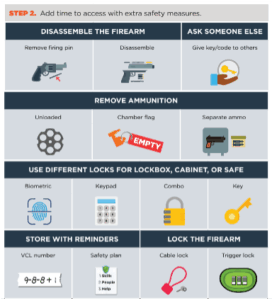
As can be seen in the below figure from the Minutes Matter guide, there are a number of strategies that can be combined with the above locations to increase time and distance, and enhance suicide prevention. It is important to think about what is best for your home, your family and your unique situation to decide what may work best for you. If you choose to involve others in your safety plan, ensure that you are following all applicable laws if you provide others with access to your firearms.

Take Aways

Secure firearm storage is a simple yet powerful way to reduce the risk of firearm suicide. Programs like Project ChildSafe®️, The Armory Project and the NSSF®️ Gun Storage Check Week®️, as well as tools like the “Minutes Matter” guide, provide essential resources and information to help make our homes safer. By adopting secure storage practices, even before suicide risk emerges within our households, we can protect ourselves and our loved ones, giving them the time they need to find help and hope.

With Safety and Responsibility Top of Mind, Shooting Sports Are Among the Safest

By Becky Yackley
World Champion Pistol Shooter

As a mother and competitor, the yearly August chorus of “It’s National Shooting Sports Month!”, always makes me grin. August is a time when many people switch to “back to school” mode, but I’m still in full-tilt competition season and I enjoy seeing my sport recognized nationally for the month. In that spirit, I want to share a bit of my own belief on why shooting sports are as American as apple pie, and as much fun (or more) than traditional school sports.

Safety

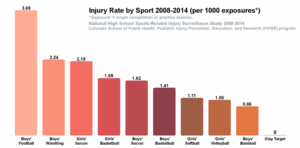
First and foremost, the shooting sports are safe. When firearms are respected, and when safety policies and strict rules are followed, it makes the shooting sports safer than just about any sport you can name. Don’t just take my word for it thought, take a peek at this graphic, which makes football and soccer look like risky parenting:

The stats on safety in the shooting sports extend to recreational hunting as well, where the data shows hunting is actually safer than bowling, tennis and fishing. A big reason for that is the dedication to safety training that is passed down from generation to generation of hunters.

Fun

The primary reason I think shooting sports are more fun than most traditional school sports is that everyone can participate. There is no “first string,” no sitting on the bench, no playing out in left field.  Everyone can participate in the way they want to. Everyone can find a shooting sport discipline that suits their desires.

Want to go fast and push yourself? U.S. Practical Shooting Association events might be your ticket. Want to learn to focus and keep it low-key on physical exertion? Trap or sporting clays might be your jam. Want to take your whole family and let everyone take part instead of mom and dad managing the concession stand while the kids compete? Go shoot a falling steel match, or get really into it and shoot a 3-gun match! And here’s the thing: you don’t have to win the match. Your “win” can be doing something as a family, or with your siblings or best friends. The shooting sports are unique in that the opportunities are really as varied as you choose to make them.

So when you hear, “August is National Shooting Sports Month,” pause a second and decide if that isn’t your hint to step away from the 5 a.m. wake up to haul your family to a crowded sports facility and miss out on family time. We started shooting local pistol and 3-gun matches when our youngest was nine years old because we had become disenchanted with the crazy lifestyle of kids’ sports — where we had to volunteer (on top of paying for them to compete) and miss being with them.

Responsibility and Heritage

Aside from family time, shooting sports also foster responsible future gun owners and teach firearm safety in a positive and meaningful way, from handing and using them correctly to storing them securely and responsibly when they’re not in use. Guns are not scary or dark —there are even ballerinas who become shooting sports Olympians and have beautiful guns and stories to share. Shooting sports afford young people (or new gun owners) time with parents and coaches who help them learn the rules of firearm safety properly. Shooting sports are truly part of our American heritage and a wholesome experience just waiting for your family to enjoy.


Becky Yackley is an award-winning competition shooter, mother, photographer, social media manager, blogger and contributor to NRA Women.