

Women, Firearms and a Little Bit of Marketing Flair
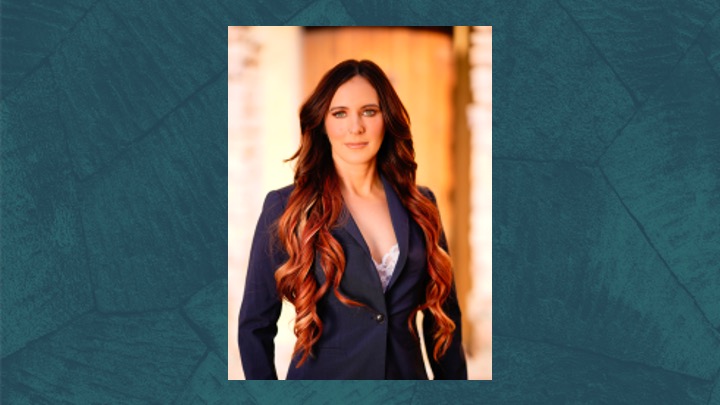
By Ashley Hleblinsky
@historyinheels | @officialashleyhlebinsky
In honor of Women’s History Month, it’s worth revisiting a corner of firearms history that is at times amusing and unexpectedly insightful: historic gun advertising aimed at women.
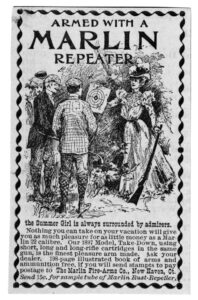
The impactful role of women and firearms long predates modern conversations about the topic, with women heavily engaged in gun ownership since the technology was invented and commercially available. Women’s roles and interests were so well known that firearm manufacturers marketed directly to them at a time when most other industries were trying to sell women the latest detergent or cooking product.
Late 19th and early 20th century advertisements show women engaging in target shooting, hunting and even adopting firearms for personal defense.
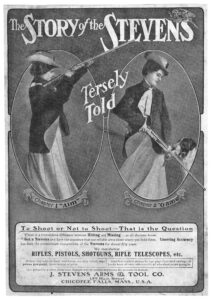
They reflected a reality that companies recognized: women were part of the market, and not an insignificant one.
Of course, the messaging itself could be creative — and when looked at with a modern lens, possibly reductive — but the desire to engage with this audience is still quite progressive for the time.
Some advertisements presented women as skilled sportswomen confidently participating in shooting, both recreationally and competitively. These portrayals often emphasized refinement and fashion alongside marksmanship, suggesting that shooting could be both respectable and stylish. Other ads leaned more heavily into domestic roles, depicting firearms as tools for protecting the home, with women positioned as capable and vigilant guardians. And then there was of course the lower-hanging fruit, advertisements that implied a woman’s shooting ability might improve her social standing or romantic prospects.
Despite these varied approaches, one consistent theme emerges: visibility.
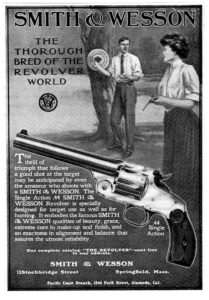
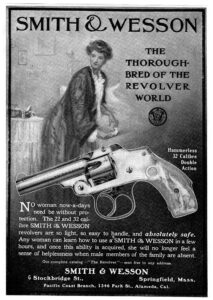
Women were not invisible in firearm culture, nor were they treated solely as passive observers. Their presence shaped how firearms were marketed and, in some cases, how they were designed. Manufacturers recognized differences in ergonomics and user preference, leading to the development of firearms that were lighter, more compact or styled to appeal to female consumers. The introduction of models such as Smith & Wesson’s Ladysmith revolver is a well-known example of this effort to tailor products to a growing and acknowledged audience.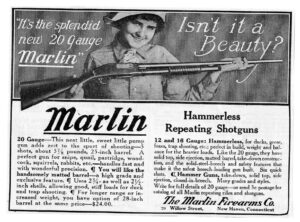
At the same time, these materials reveal the social expectations that framed women’s participation. Advertisements often balanced inclusion with constraint, presenting women within acceptable cultural norms, emphasizing beauty, grace and domestic responsibility even as they handled firearms. The result is a layered historical record — one that demonstrates genuine participation while also reflecting the limitations of the period’s gender roles.
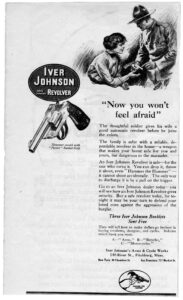
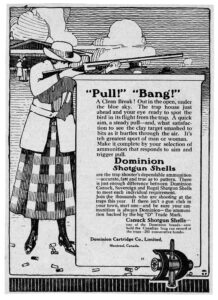 That duality is precisely what makes these sources so valuable. They offer clear evidence women were not peripheral to firearm history; they were part of its development as consumers, shooters and cultural icons. At the same time, they illustrate how broader societal attitudes shaped the ways in which that participation was presented to the public.
Viewed today, these advertisements invite both analysis and a degree of amusement. Some are striking in their forward-looking recognition of women as capable and independent users of firearms. Others are products of their time, blending empowerment with stereotypes in ways that feel familiar even now.
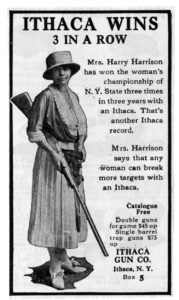
Taken together, they reinforce a simple but important point: Women have long been part of the story of firearms. Their roles have evolved, expanded and at times been constrained by cultural expectations, but their presence is consistent.
This Women’s History Month, these materials serve as a reminder that women’s contributions to firearm history are neither new nor marginal. In fact, they are foundational, visible and worth recognizing.
Ashley Hlebinsky is one of the nation’s foremost authorities on firearms history. She has advised major institutions including the Smithsonian Institution, National Park Service, Los Angeles Police Museum, Mob Museum, Hindman Auctions, and Colt CZ Group, and has served as an expert witness in nearly 30 civil and criminal cases in the U.S. and Canada. Hlebinsky is the co-founder and Executive Director of the University of Wyoming College of Law’s Firearms Research Center. A prominent public historian, she has appeared on Discovery Channel’s “Master of Arms,” Outdoor Channel’s “Gun Stories” with Joe Mantegna, and Fox Nation’s “Wanted: Dead or Alive,” and serves on multiple boards focused on mental health and suicide prevention within the gun community.