

An Interview with Drew Tri, USA Clay Target League

It’s back to school season. With all kinds of kids sports programs kicking in to high gear, it’s a good time to feature the shooting sports as an option for junior high and high schoolers. We sat down with Drew Tri, Head of Marketing for the non-profit USA Clay Target League, which provides youth clay target shooting sports opportunities to over 57,000 students on nearly 2,200 school approved teams, to talk about the biggest misconceptions about kids and the shooting sports and the value organized sports bring to kids’ lives.
What are some of the biggest myths about youth shooting sports (and what should people really know)?
To no one’s surprise, the long-perpetuated myth that “kids and firearms are a bad mix” has been a huge challenge to overcome. However, with each new athlete who participates, that narrative gets harder and harder to sustain.
Positive visibility is really important, and our efforts – along with those of other heritage sports organizations, such as the National Archery in the Schools Program (NASP), have really helped to educate and inform the public.
Another huge myth is that youth shooting sports have to be expensive. They don’t. The average cost to participate in a season in the League’s program is typically less than half the cost of traditional team sports like football, hockey, or even baseball.
When you keep participation costs reasonable, youth shooting sports can actually be very economical for families and schools. There are more kids shooting great scores – even perfect scores – with inexpensive pump-action shotguns borrowed from family members than you might think.
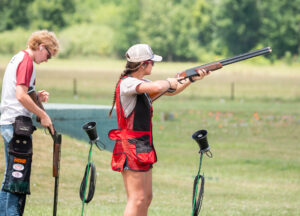
What kind of obstacles do youth shooting programs face especially in schools, and what can be done to overcome them?
There are over 2,100 schools nationwide that participated in the USA Clay Target League this year , I think that demonstrates there are fewer obstacles at the school level than people may think. In fact, I’ll even go on to say the biggest obstacle is often the idea that there are big obstacles.
I know it’s easy to assume different communities or institutions will be resistant. I’ve been told “That’ll never happen here” more times than I can count in New York, in Illinois, in California and everywhere in between. But today there are thousands of vibrant high school clay target teams across the country. It can be done, it has been done, and it all starts with a conversation between parents and schools.
The real obstacles that schools face is space. In many areas there simply isn’t enough range capacity for anything but a few small teams — if that. That’s problematic because the clay target team at a school often becomes one of the largest activities at the school. If local ranges don’t exist or are unwilling to let these high school students shoot, then these students simply don’t get the opportunity — not because of the school, but because the outdoor community isn’t stepping up to ensure their own future.

What are the most important things you hope young people learn from participating on a school’s youth shooting sports team?
I don’t hope, I know. Because these athletes are on school-supported teams, League athletes develop confidence, discipline, and resilience. They’re learning the importance of teamwork and communication. They’re not only learning who they are, they’re learning who they can be. Participating in school activities leads to better life outcomes, like better jobs and better relationships.
Nearly 40% of League athletes don’t participate in any other school activity. The League is potentially helping thousands of students feel reconnected and engaged with their school and team. There is a huge under-served population of students out there simply because their interests don’t align with the “traditional” activities schools typically provide. The schools that choose to offer this opportunity to their students are often amazed and delighted in seeing a significant number of their students suddenly care about being students again.

What kind of an emphasis do you (and your athletes) put on storing firearms securely when they aren’t in use — and why?
The League’s motto is “Safety, Fun, Marksmanship – in that order.” Safety is at the forefront of everything the League does. Every athlete who wants to participate must have firearm safety certification, either from a state agency — like a state’s Departments of Natural Resources (DNR) or Game & Fish Department — or through our own Student Athlete Firearm Education (SAFE) program.
This is also where I absolutely must credit the thousands of coaches and other volunteer team staff who work with these students every day. They’re the ones on the front lines educating and reinforcing firearm safety, safe storage, and proper maintenance. It’s because of their dedication that there has never been a serious accident or injury in the history of the League.
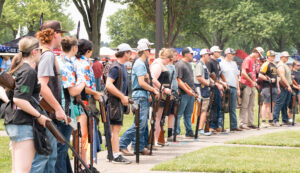
What role do you think youth shooting sports athletes could play in promoting firearm safety in their communities?
One of the most effective partnerships I’ve seen is when local law enforcement or emergency services get together with the high school teams for special events. Local communities having “Students vs Police” or “Students vs Firefighters” competitions are fantastic ways to both educate their communities and demonstrate safe firearm handling. Plus it’s a great confidence-builder for the students!
Aside from special events, having a school shooting team means that others in the community, whether it be family members or friends, can develop a curiosity and give it a try themselves — it’s just the nature of the sport. Our own research has shown at least 80% of ranges that host high school shooting teams also see increases in their non-youth participation. Clay target shooting is a social activity, and families are coming out to the range outside of their team activities to shoot some targets together. True firearm safety starts with knowledge, experience, and respect — rather than fear.
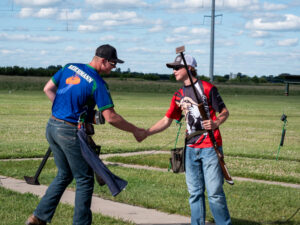
Andrew “Drew” Tri grew up in Thief River Falls, Minn., where his first job was as a setter and puller at the local trap range. He was also a youth shooter, and earned Sub-Jr and Jr Minnesota ATA All-State awards in the mid-’90s. Today, Drew is the Head of Marketing for the USA Clay Target League, where he’s helped grow the League from a few thousand athletes in three states to over 57,000 athletes in 40-plus states over the last decade — giving it the largest yearly participation of any clay shooting sports organization in the world.